
These Mammals Share Characteristics with Cats
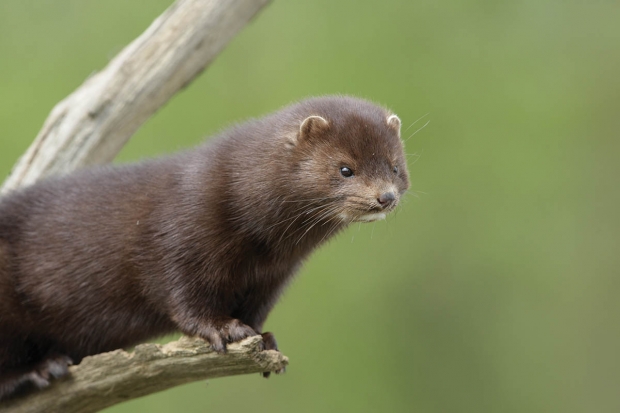
(Mustela vison)
Found in all 49 continental states, South Carolina mink populations are highest in the southern coastal marshes and in the upper Piedmont. These sleek, semiaquatic and carnivorous mammals are part of the family Mustelidae, which also includes weasels, otters, badgers, and others.
Mink are less abundant in South Carolina now than during the 1950s. The reasons have not been determined, although the indiscriminate use of pesticides such as DDT, which polluted many stream systems during the 1950s and 1960s, is suspected as a major reason.
Huntington Beach State Park in Murrells Inlet, along the rock jetties on the north end, is reportedly a great place to observe these fascinating animals.
Mink share some characteristics with cats. They purr when they are happy or content, and will also express displeasure the same way as cats by hissing (!). Minks aren't large but they can be ferocious when necessary and are even capable of killing animals far larger than themselves. When threatened, they can release a foul-smelling liquid from their anal scent glands.
The mink has a long slender body with short legs, standing only about 3 ½ inches at the shoulder. Males are significantly larger than females. Their coat is usually dark brown, with a black tail tip and often a white spot under their chin.
They move quickly on land and can also climb trees and swim. They can hunt for food in the water, swimming as far as 100 feet and diving to depths of more than 15 feet. Their partially webbed feet help them get around in the water. Thanks to their aggressive and often secretive nature, not many animals willingly hunt minks. In fact, the main threat to their survival is, of course, humans.