
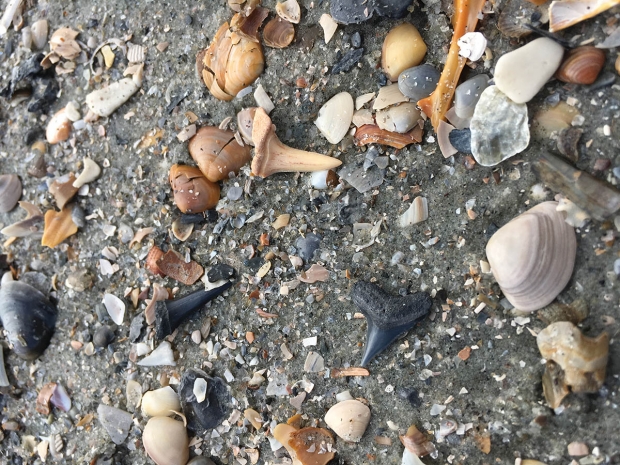
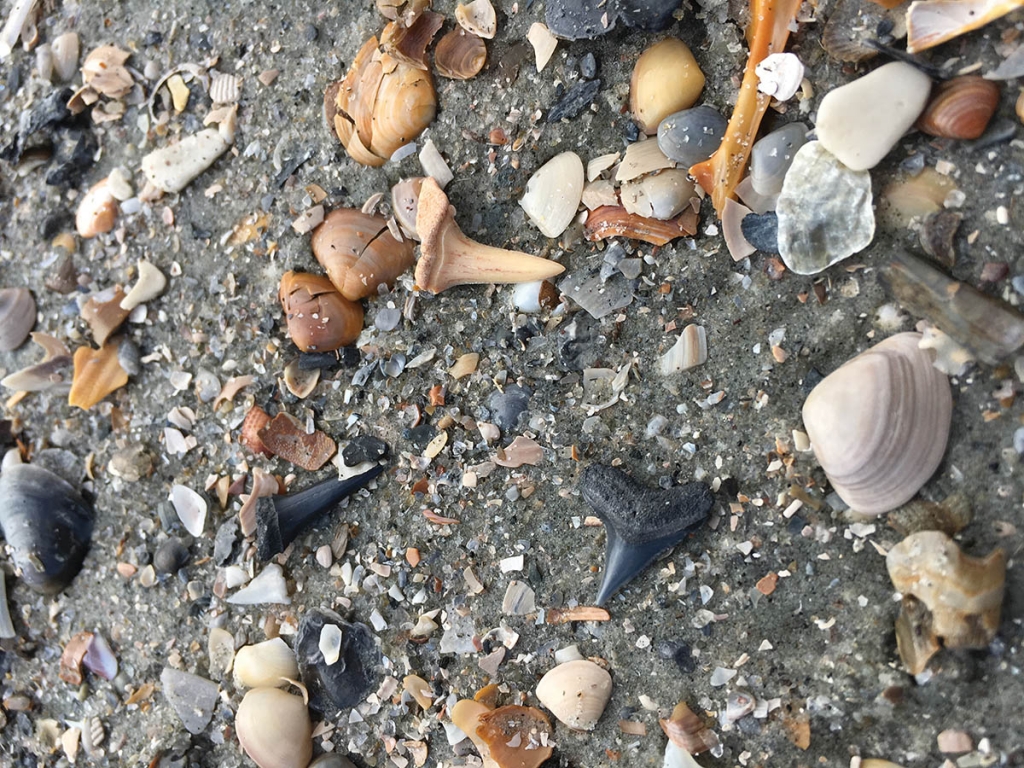
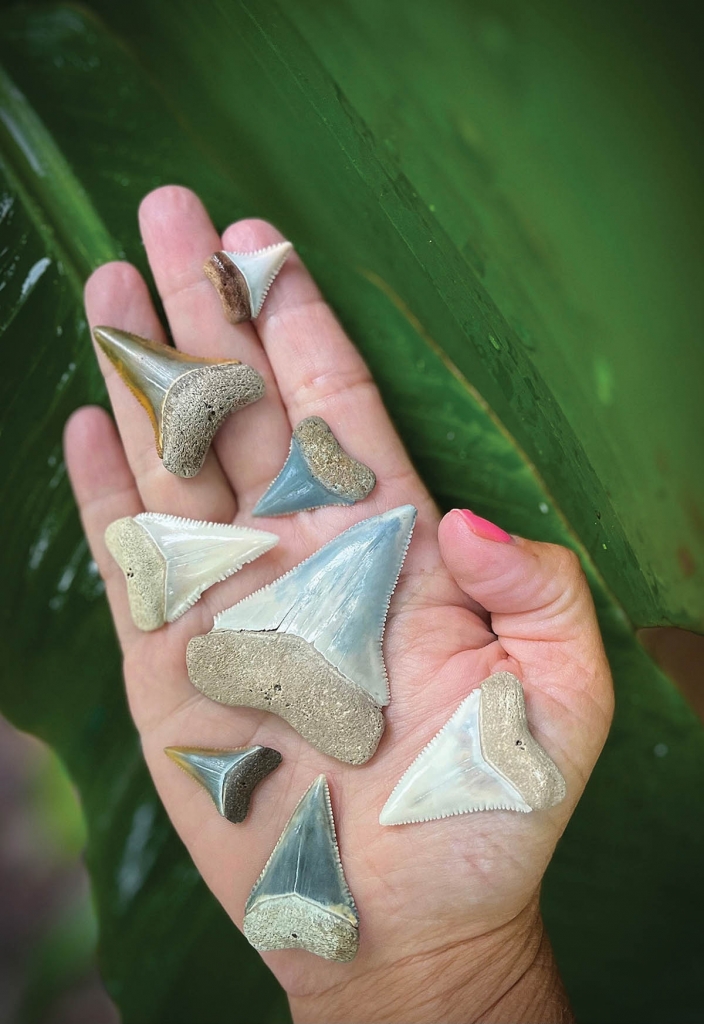
You might have seen them on the beach – eyes fixed downward, carefully examining the ground below them with laser-like concentration.
These are the shark tooth hunters. For some, it’s a hobby. For others, it’s an obsession. For still others, it’s a calling or a career. But one thing is for certain – once you start, you’ll find it hard to stop. With each find comes validation, fueling a thirst for knowledge and an ever-growing collection.
Welcome to the subculture.
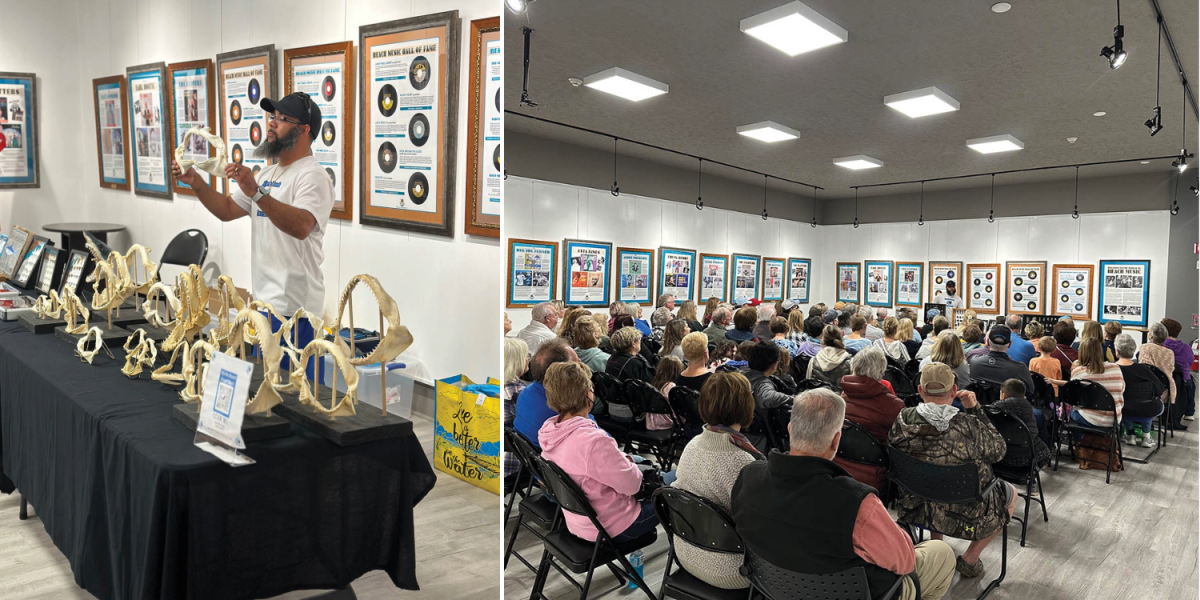
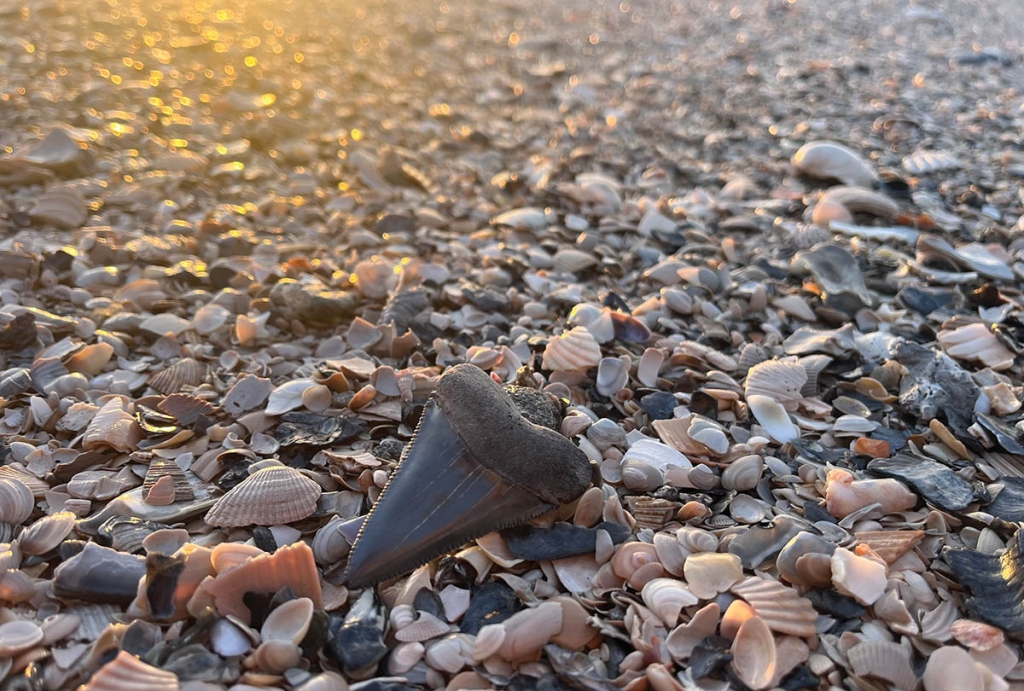
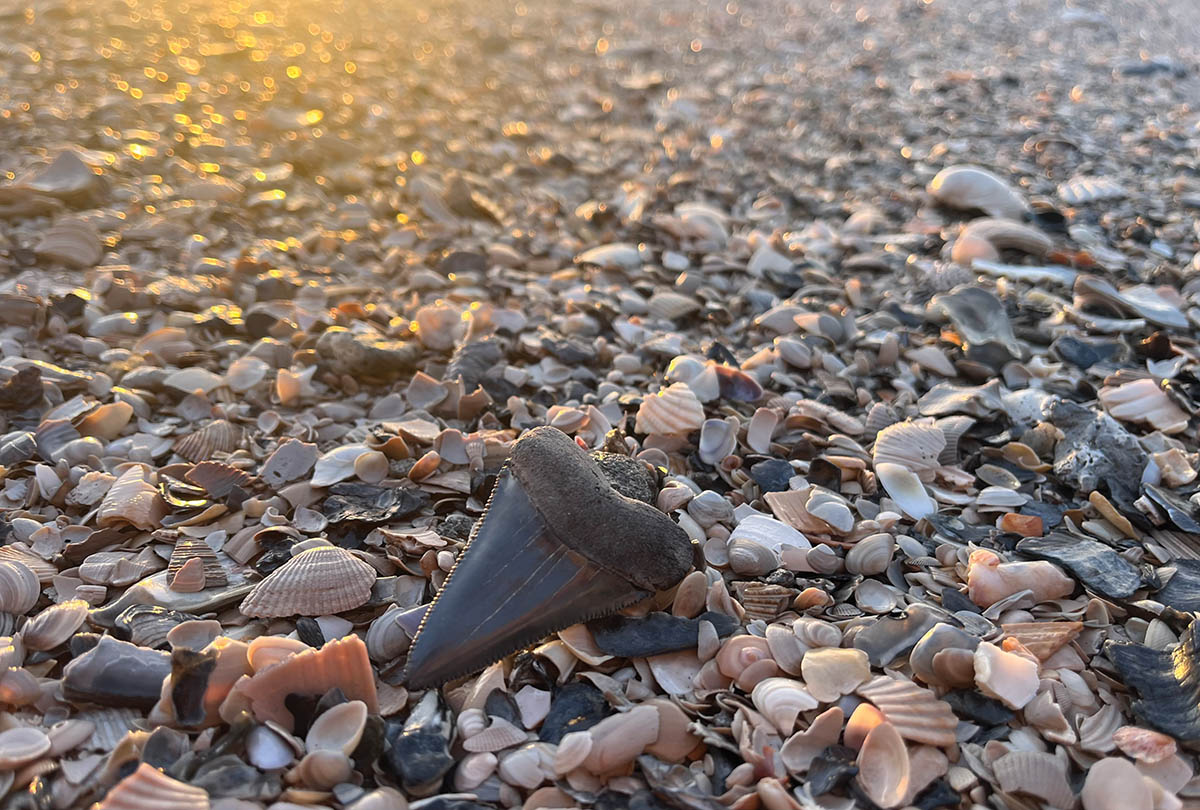
When Charles Shelton, Jr. was a small child on family vacations to the Grand Strand from West Virginia, he was drawn to the shiny black triangular objects he would find at his feet on the beach.
“I didn’t know what they were, and my parents didn’t know what they were,” he says, but this early experience was formative and instilled within him a desire to learn more.
Between the ages of 7 and 10, he would see the objects on trips to other beaches as well. By that time, he was well aware that these were shark teeth and he was on his way to developing a lifelong passion.
“All I could do was take all that stuff back home and look at it for hours. This was before the Internet, so all I had was the local library,” Shelton says. “I thought it was so cool because I loved the ocean and I loved sharks.”
He also began to learn about how the waves worked, how the moon affected tides, and the impact of the winds on tidal activity.
Sometimes on these beach trips, he would luck out and random passersby would give him answers about his finds. For Shelton, these people were key in providing him with eureka moments and opening up worlds of discovery.
Shelton cites now longtime friend Tom Pierce of Trader Bill’s Shark Tooth Cove inside the Gay Dolphin in Myrtle Beach as one of the few people who took the time to teach him about his discoveries in those early days.
“He was very, very helpful,” Shelton says. “I spent a lot of time in there – observing, asking questions. I know he got tired of me but he never showed it.”
He kept learning – expanding his knowledge base while amassing an enviable collection of shark teeth, jaws, fossils and so much more – even during his 25-year career as a professional drummer.
Ten years ago, Shelton launched an online platform called Myrtle Beach Shark Teeth, a public Facebook group now topping 56,000 members and a place for likeminded enthusiasts – novices and seasoned hunters – to find the answers they need from others in the community. According to Shelton, that page currently garners 2.5 million views per month.
Shelton stepped away from music 10 years ago and moved to Conway from Charleston, W.Va. in 2022.
Shortly after he moved here, Shelton was invited to speak to members of the Grand Strand Shell Club.
“I had all of this knowledge but I didn’t get a chance to share it – at least not like I wanted to – even though I had the platform to do it. That just opened up the door. Three years later, I’m doing workshops and the demand has been through the roof.”
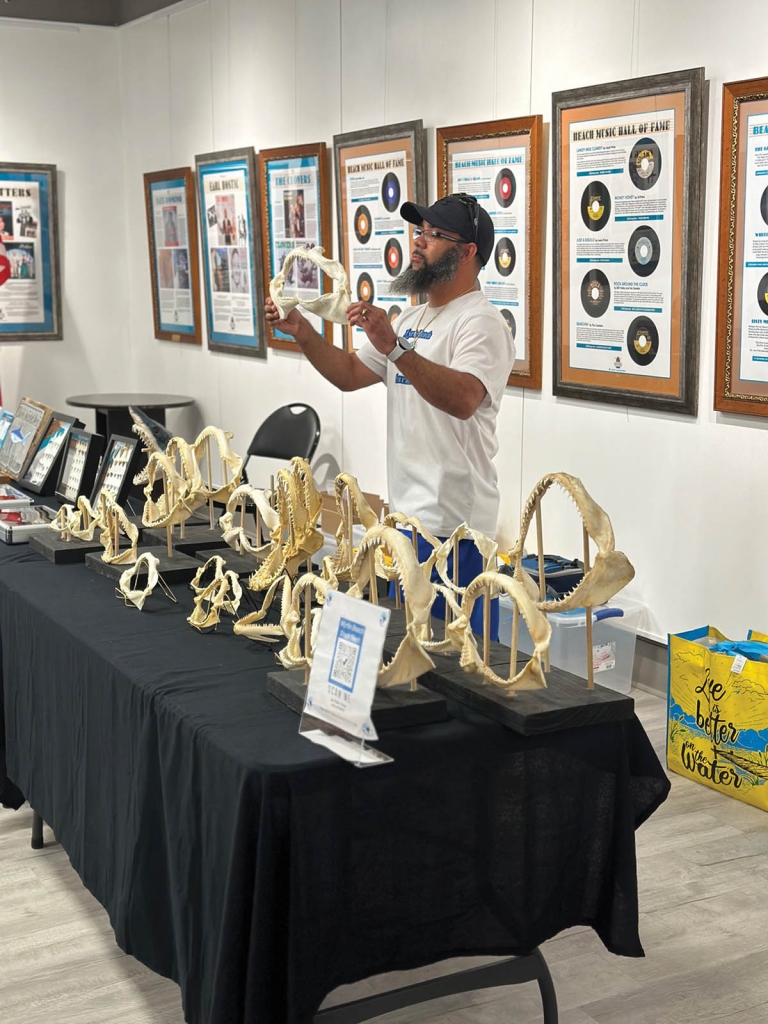
He now averages 60 to 80 such workshops per year at spots like Brookgreen Gardens, Hobcaw Barony, Ripley’s Aquarium, various colleges, and many more.
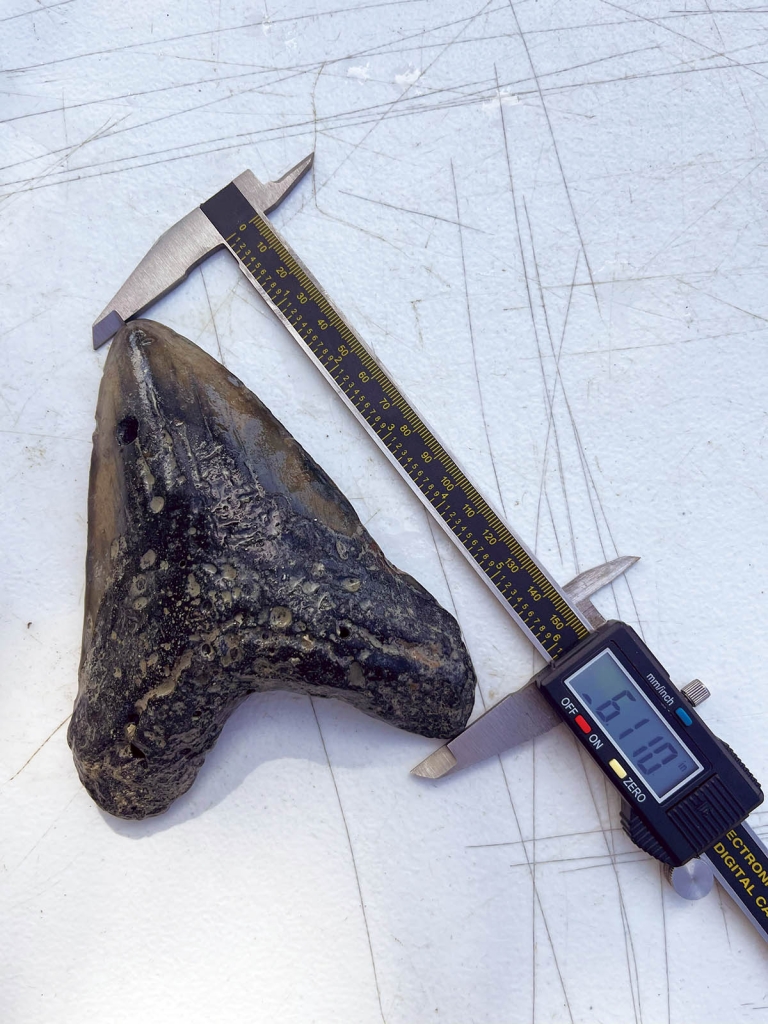
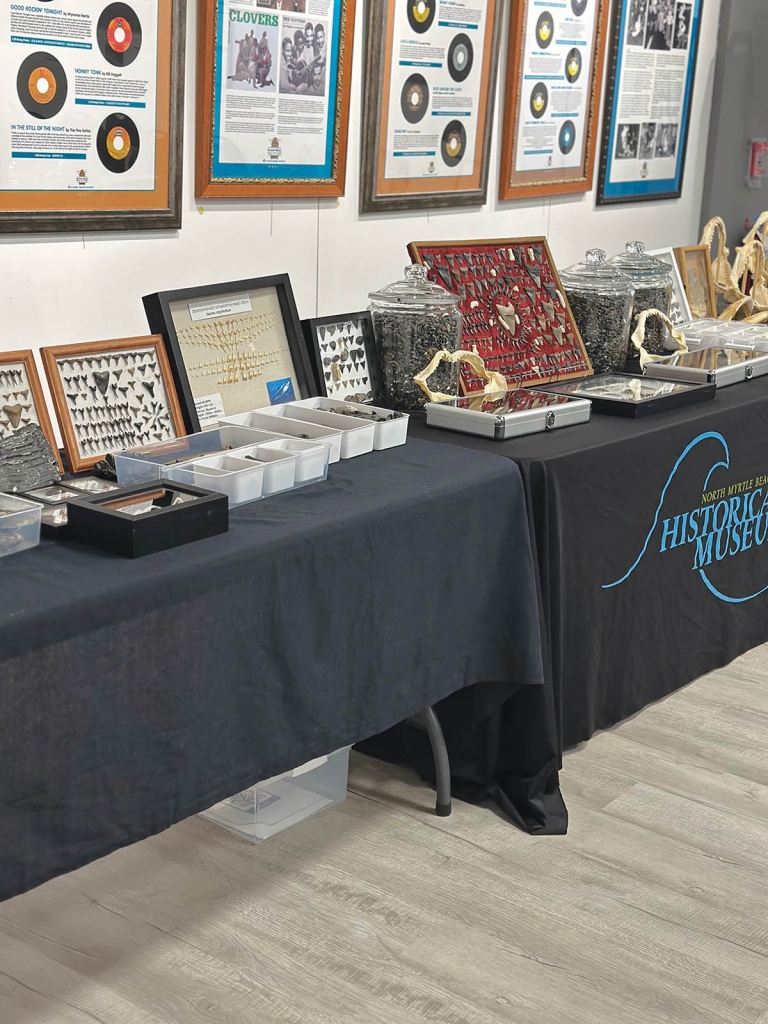
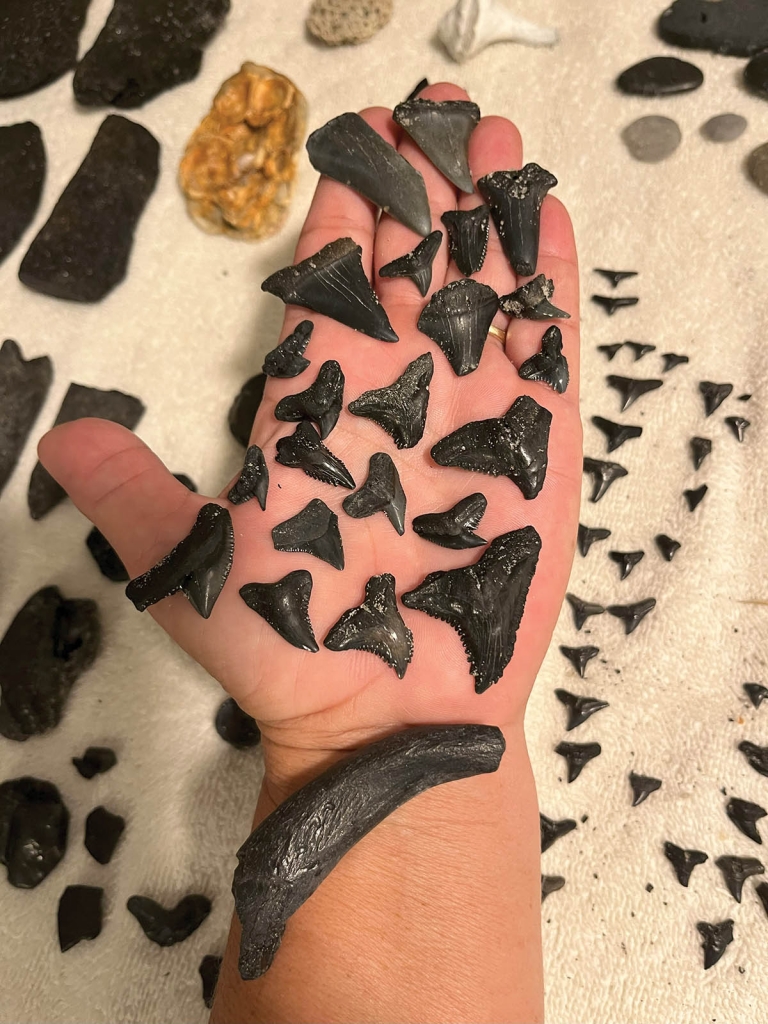
“I bring a lot of stuff with me,” Shelton says. “I’m bringing sets of jaws, bringing fossils, I’m bringing teeth (including megalodon teeth) – bringing stuff you typically wouldn’t see outside of a museum.”
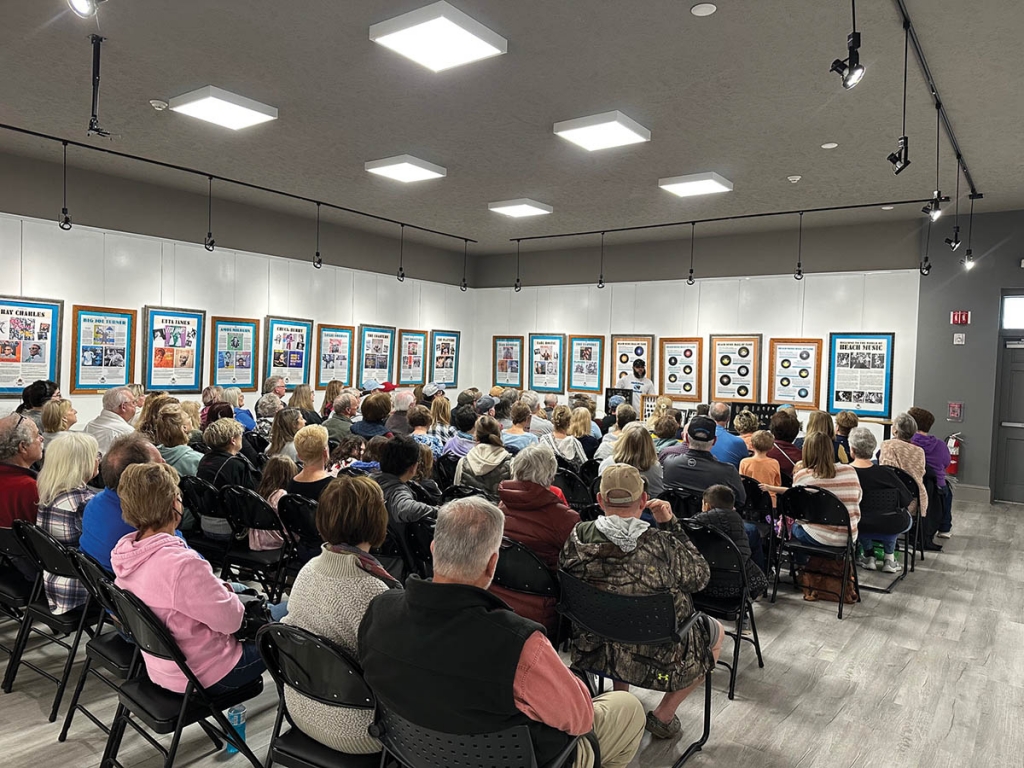
Shelton has presented multiple times at the North Myrtle Beach Area Historical Museum. Director Kaitlyn Emielita says these events have been popular with all ages, with an average of 75 people in attendance.
“Charles is very knowledgeable on shark teeth and fossils and is very charismatic,” Emielita says. “He is able to engage a diverse audience, which can be hard to do. Usually after his talks, a lot of our visitors are motivated to go to the beach to look for shark teeth and fossils.”
Shelton says he wants people at these workshops to come away with a positive experience based on the optimism, information and energy he brings.
Shelton’s goal is inclusiveness.
“It’s a world I wanted,” he says. “I wanted a place for people to feel welcomed, enlightened, encouraged and educated.”
For more information about Shelton and his platform, visit www.myrtlebeachsharkteeth.com.
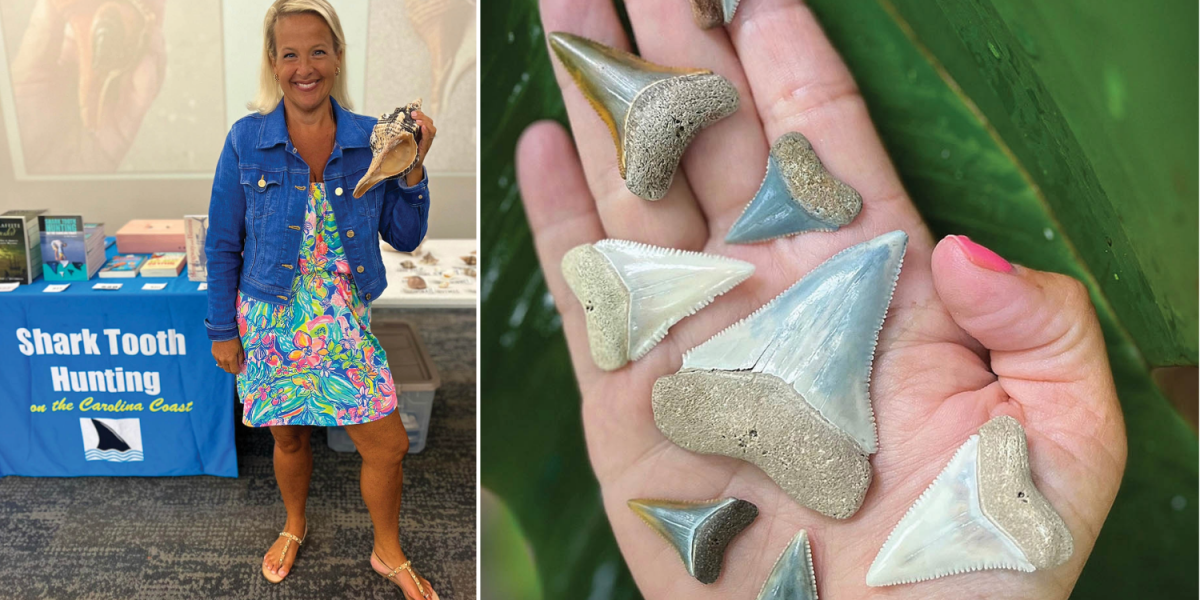
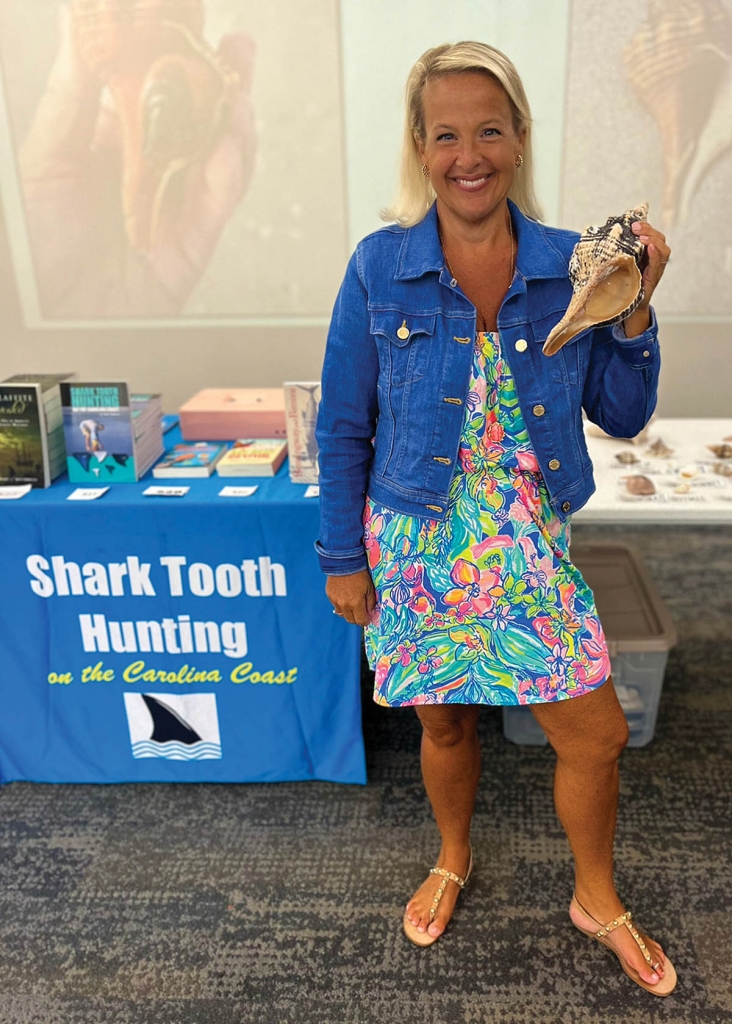
Ashley Oliphant, Ph.D. has been on the national radar as a recognized authority on shark tooth hunting for more than a decade.
Her 2015 book, “Shark Tooth Hunting on the Carolina Coast,” is a handy reference guide packed with color photos, laying out the key information novices need to get started in the hobby.
Her seventh book, “The Ultimate Shell Seeker’s Guide: Building a Better Beachcombing Strategy,” is due out in May from the University of Georgia Press.
Oliphant spent two decades in academia. She’s a Hemingway scholar who taught as an American Literature professor at UNC-Charlotte, UNC-Greensboro and most recently at Pfeiffer University.
“I wanted to step away from full-time higher ed and focus on other things,” Oliphant says. “I realized – having published five books on various topics at that time – that I could become a working writer and beachcomber and replace my salary. I took a leap of faith, and boy am I glad I did.”
In addition to her writing, Oliphant stays busy delivering lectures near and far about her books. There are workshops, presentations, excursions and summer reading programs. There are also beachcombing classes and other courses, most in connection with the OLLI (Osher Lifetime Learning Institute) program at Coastal Carolina University and as of this fall, Duke University.
“I love to be out hunting, but I get equal joy from being in a classroom – and being on the beach with newcomers,” she says.
Oliphant lives in the Charlotte area, but spends roughly three months a year hunting on the Carolina Coast. For as long as she can remember, her father used to take her to the beach on family vacations to the Windy Hill area.
“We did not go to the go-cart track, the arcade, or the mall,” she says. “We were on the beach, sun-up to sundown. He taught me how to be curious about the world around me and we collected seashells and shark teeth.”
Much like Shelton, Oliphant didn’t know what she was finding at first – only that the objects were pretty and that she liked them. Identification was not easy at that time.
“It was nearly impossible in those days unless you were a scientist or got connected with somebody who was really knowledgeable about fossils,” she says, adding that the internet has changed everything as far as access to knowledge for those with a desire to learn.
She points to online communities like Shelton’s Myrtle Beach Shark Teeth and a private Facebook group called East Coast Fossil Club as boons to those seeking answers.
“As long as the pages are well-moderated – which those are – it’s one of the best things to happen in the last ten years on the shark tooth hunting scene,” she says.
According to Oliphant, that sort of access and sharing of information were not available when she set out to write her book. But there is also value in having a physical field guide at hand when hunting – and she owns several that continue to prove invaluable.
“Shark Tooth Hunting on the Carolina Coast” came about because Oliphant saw a need within the community.
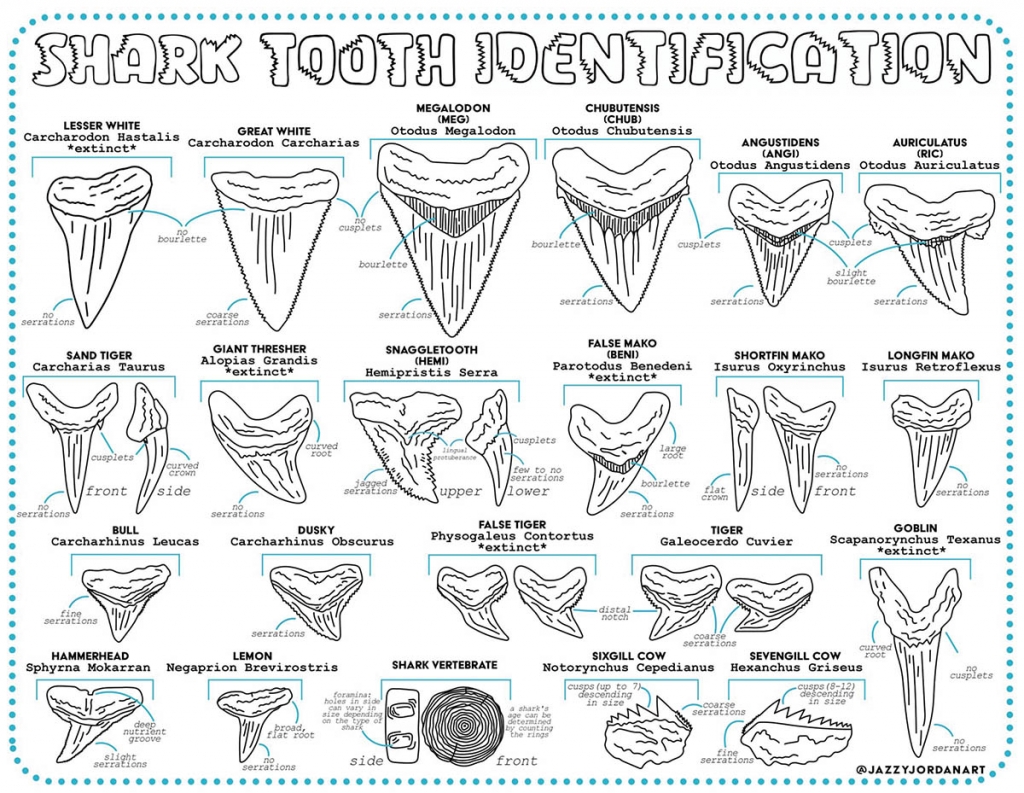
“I wanted a simple guide for anybody – whether you were eight years old or 88 years old – to be able to show what you found next to good, high-quality pictures – and know just enough about where the animal came from without becoming too overly scientific,” she says.
Oliphant’s hunting approach stems from the fact that she is a keen student of the environment.
“I track moon phases, the wind – both direction and speed. I’m tracking wave heights, and have kept journals for years of all the locations I hunt, looking for patterns. The information that I offer in my lectures is very strategy focused.”
For information about Oliphant, visit www.facebook.com/on.the.beach.with.dr.ashley.oliphant
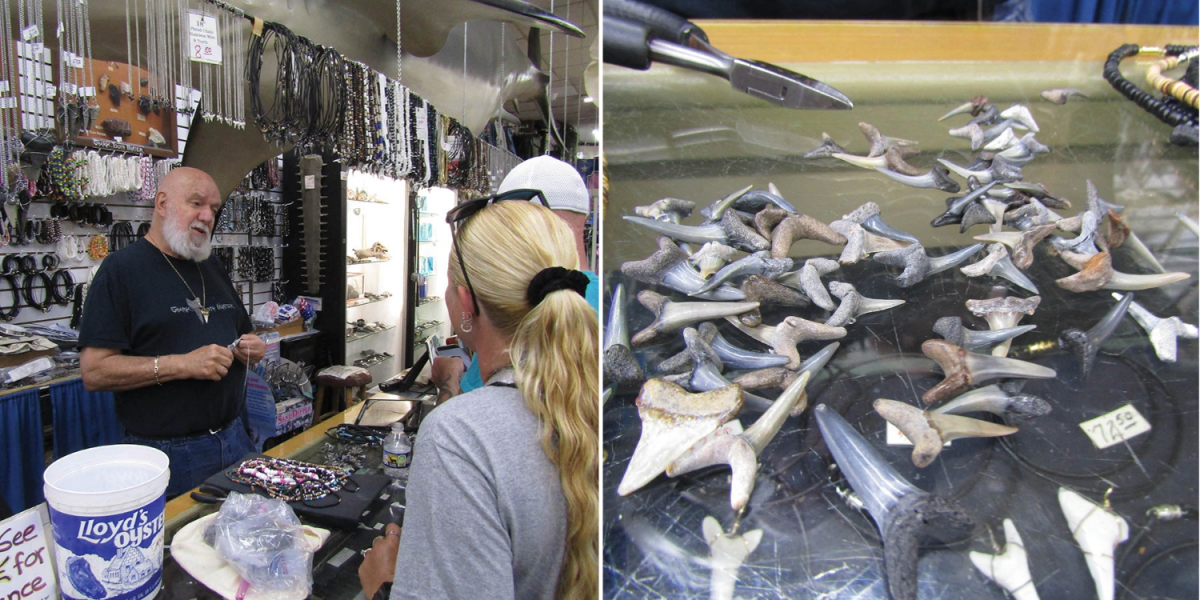
Tom Pierce arrived on the Grand Strand in 1969 and never left.
“When I got here, there was one building between Conway and Myrtle Beach and 14 miles of pine trees. There were open spaces. Garden City and Surfside were a mile apart instead of touching. There were one-story motels – and you could literally get a double handful of shark teeth about every time you went to the beach,” he says.
To say there has been an uptick in shark tooth hunting in Myrtle Beach would be a colossal understatement.
“There’s an uptick in everything in Myrtle Beach,” Pierce notes. “There are so many more people here now than there used to be, but that doesn’t mean there’s less teeth.”
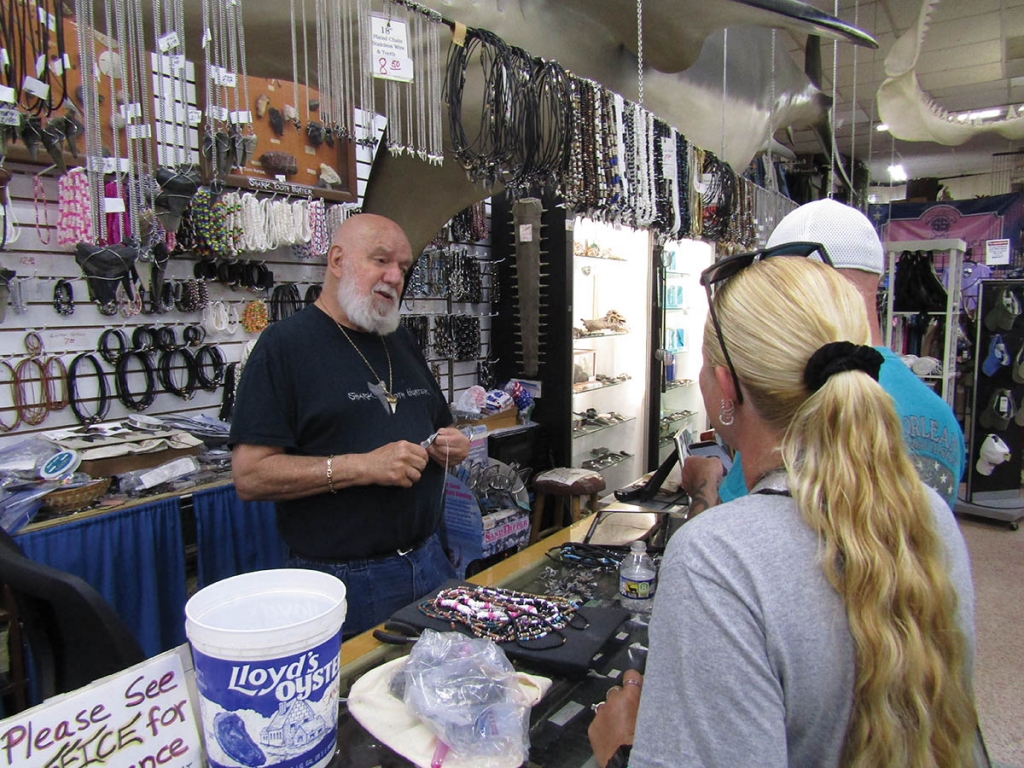
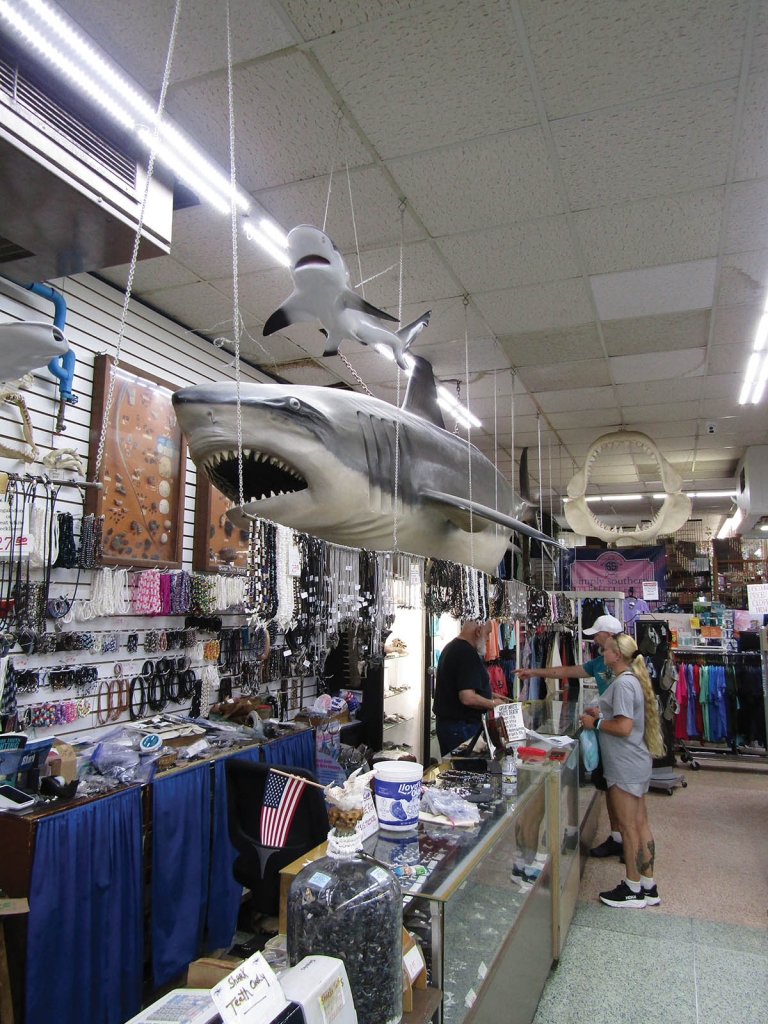
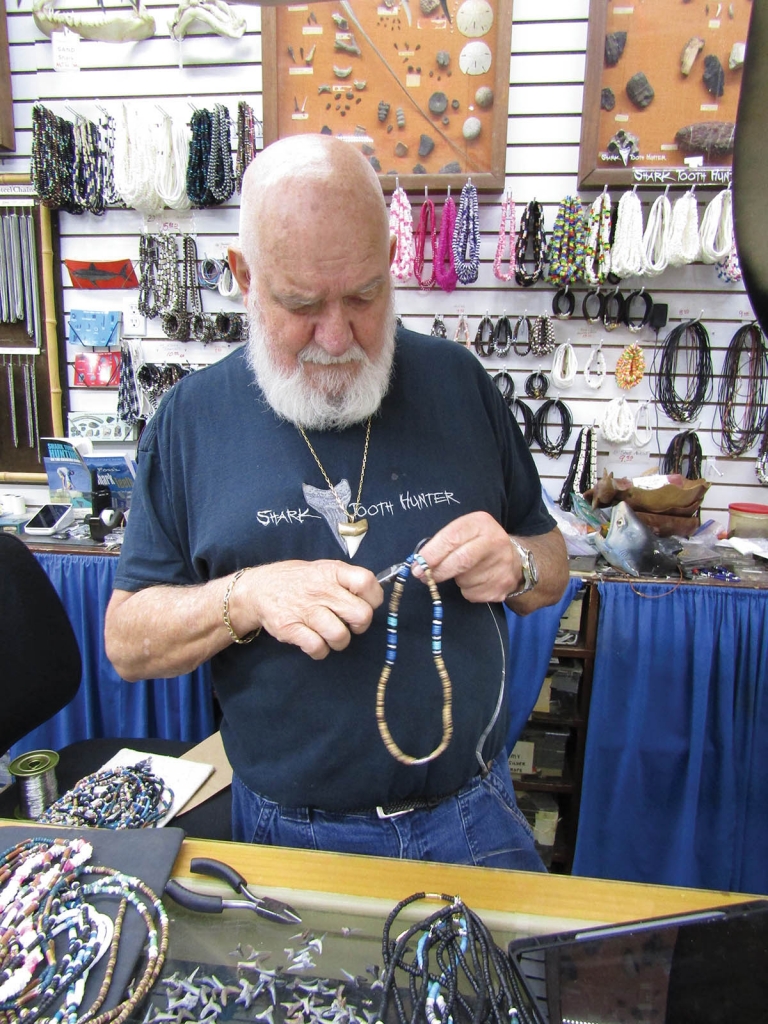
Pierce arrived from Greenville, N.C. with his best friend, whose aunt and uncle – Bill and Fran Swanson – owned Trader Bill’s Shark Tooth Cove inside the Gay Dolphin Gift Cove on Ocean Boulevard. The business, which specializes in shark tooth jewelry, has been in operation since 1956.
Pierce and his friend worked 98 hours a week during the summers while living with the Swansons – saving every penny to pay for their last year of college.
“When we got done at college, Trader Bill talked me into coming back for one last summer and I never left,” Pierce says. “I managed it for him until he passed away in 1978, and then managed it for his wife until she retired in the early 90s. I bought her out when she retired.”
Fran Swanson passed away in February.
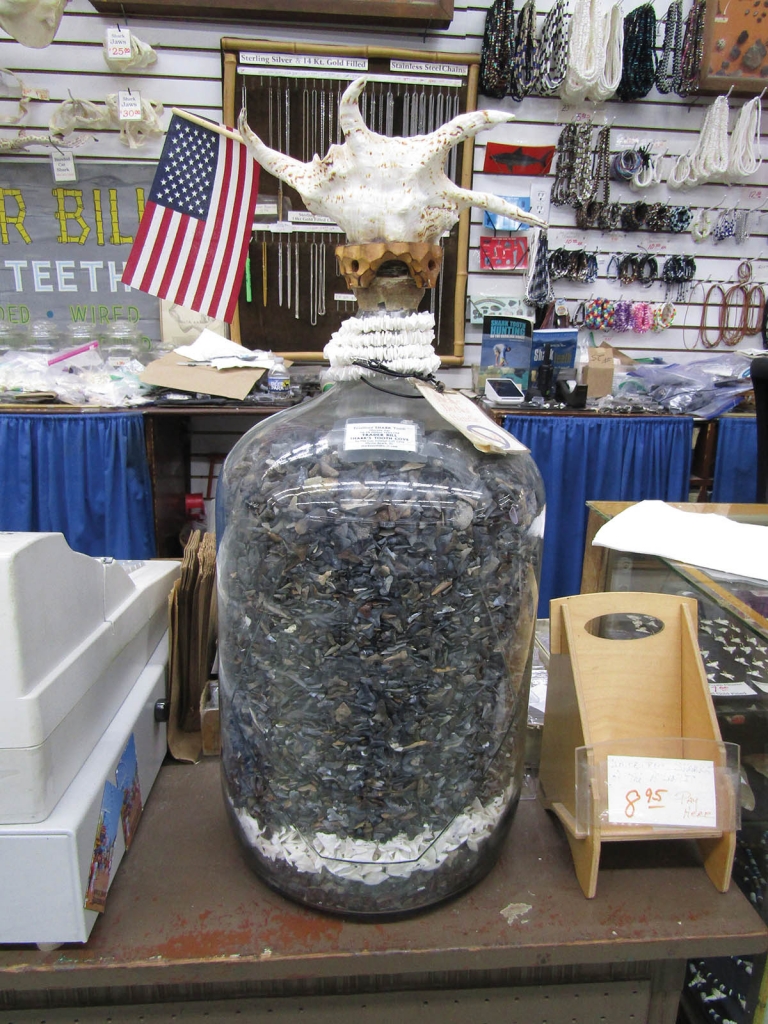
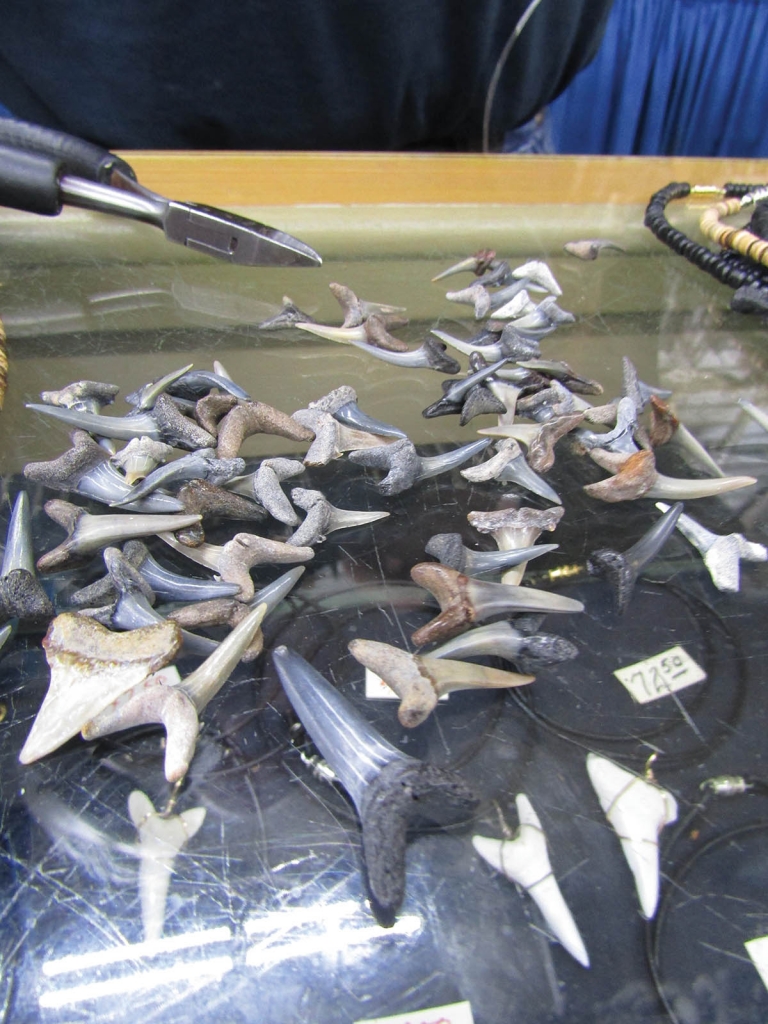
Pierce, 76, says Swanson bought every shark tooth he could get his hands on, and there are still gallons and gallons of them left over. Pierce himself no longer hunts.
“I’m here in the season for 12 hours a day and I can’t bend over like I used to. But I have found thousands and thousands of them over the years,” he says.
He’s happy to identify them for folks who might come in, as long as they don’t bring in buckets at a time.
“If I have time, I can identify them, but I just can’t spend all day doing it. I make my living making the jewelry.”
Pierce says he is in possession of two prized megalodon teeth – one found in the Lumber River in North Carolina and the other dug up in a phosphate area.
“I’ve sold some big teeth, but these are not for sale,” Pierce says. “If I sold them, I wouldn’t have something for the kids every day. You can’t impress kid with, ‘I used to have two of the biggest megalodon teeth ever found.’ If they don’t see them, they’re not impressed.”
Fifty-six years in, Pierce is still at it in the tourist season – crafting his jewelry in his corner of the Gay Dolphin.
“I’m too stubborn to quit, “Pierce says.
You can reach Trader Bill’s Shark Tooth Cove at (843) 448-6328.
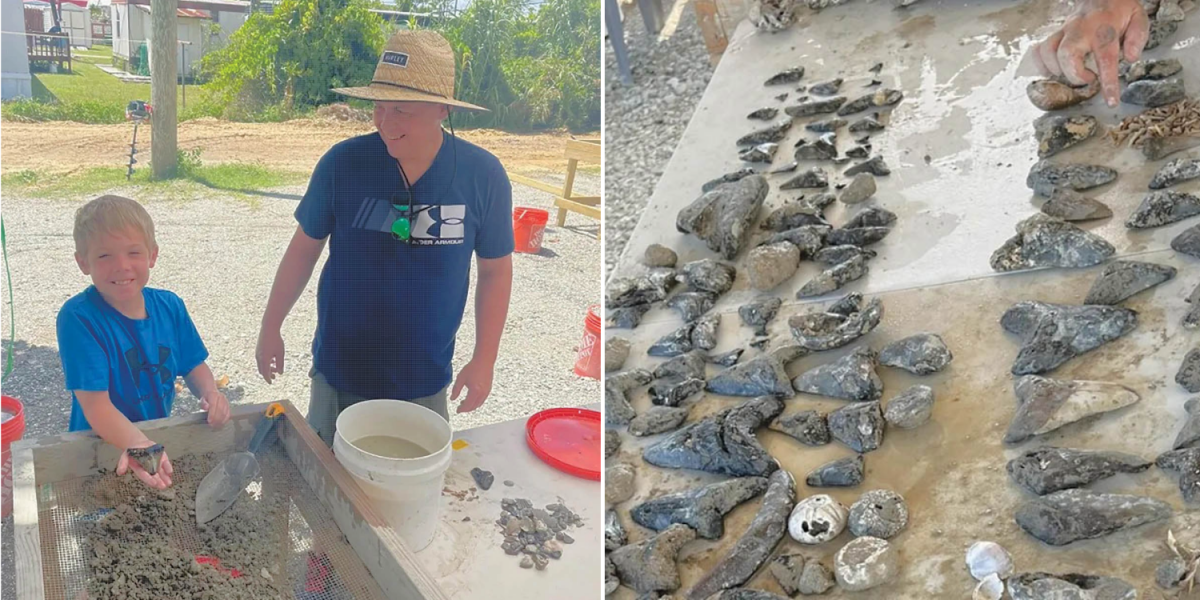
Lauren Booth of Conway started hunting for shark teeth when she was four years old, beginning with quick trips to the beach with her grandmother.
She has been known to spot them in driveways composed of coquina, a highway base which is made of fossilized shell fragments and cemented together by dissolved calcium carbonate.
“I have a good eye for that stuff – for something weird, out of place, or is not supposed to be there,” she says.
Booth and her father own and operate Booth’s Christmas Tree Farm in Conway. One day, she was having a conversation with Cameron Sebastian, one of her regular customers and owner of Coastal Scuba, the Little River Fishing Fleet and the Hurricane Fishing Fleet.
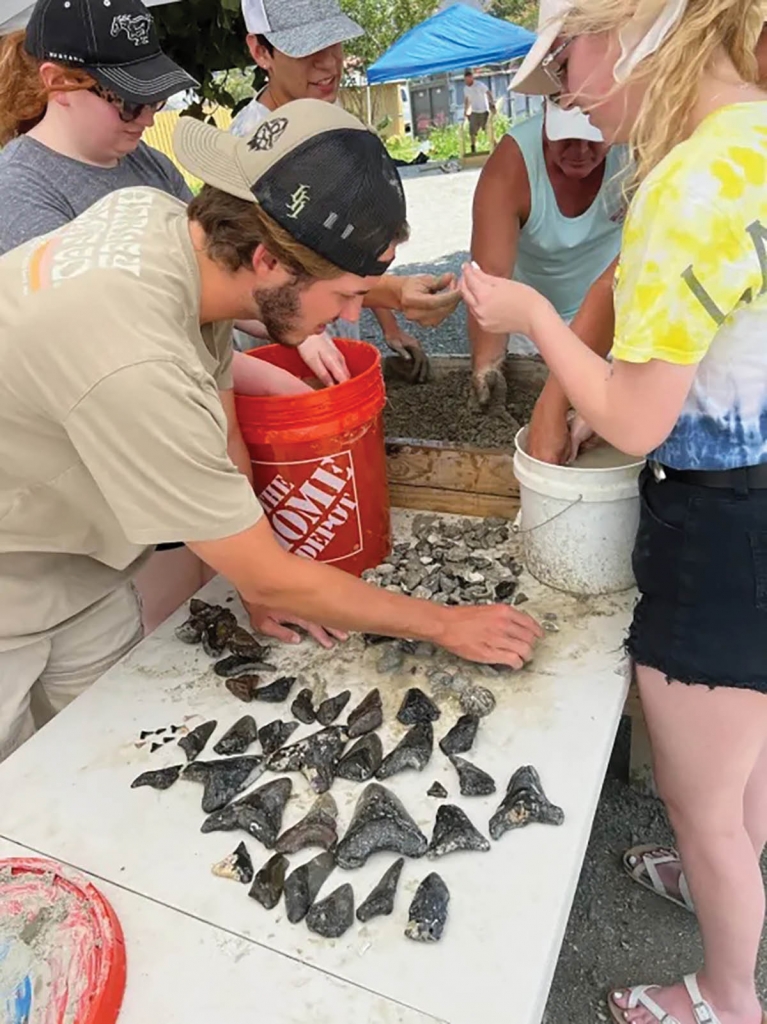
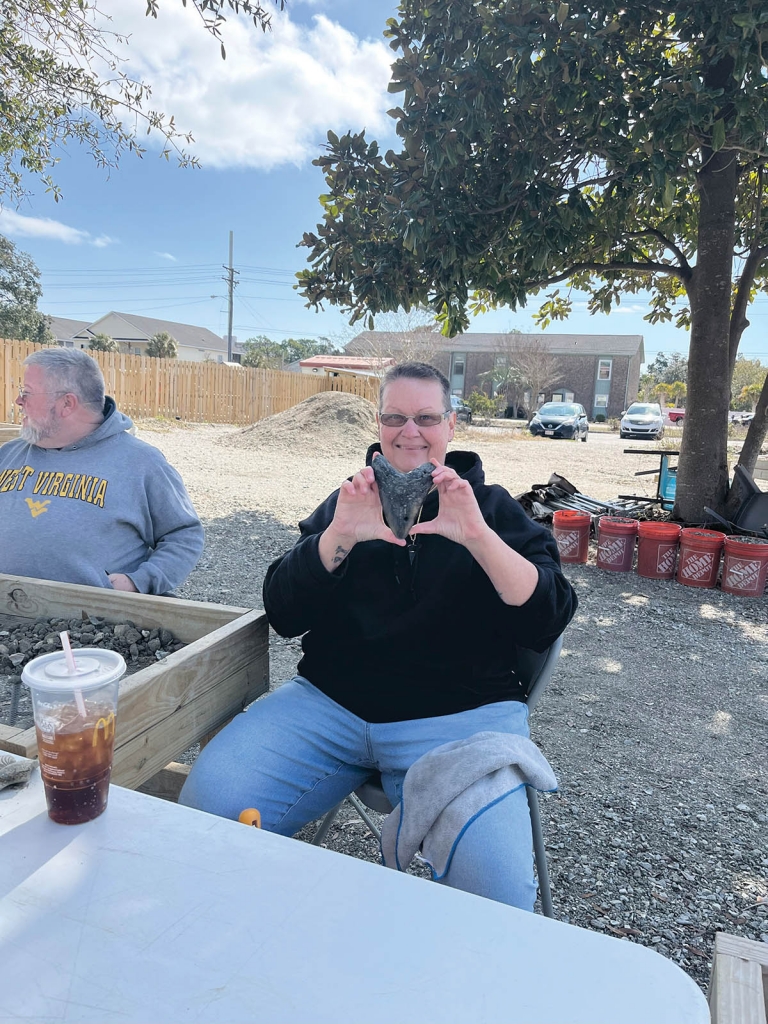
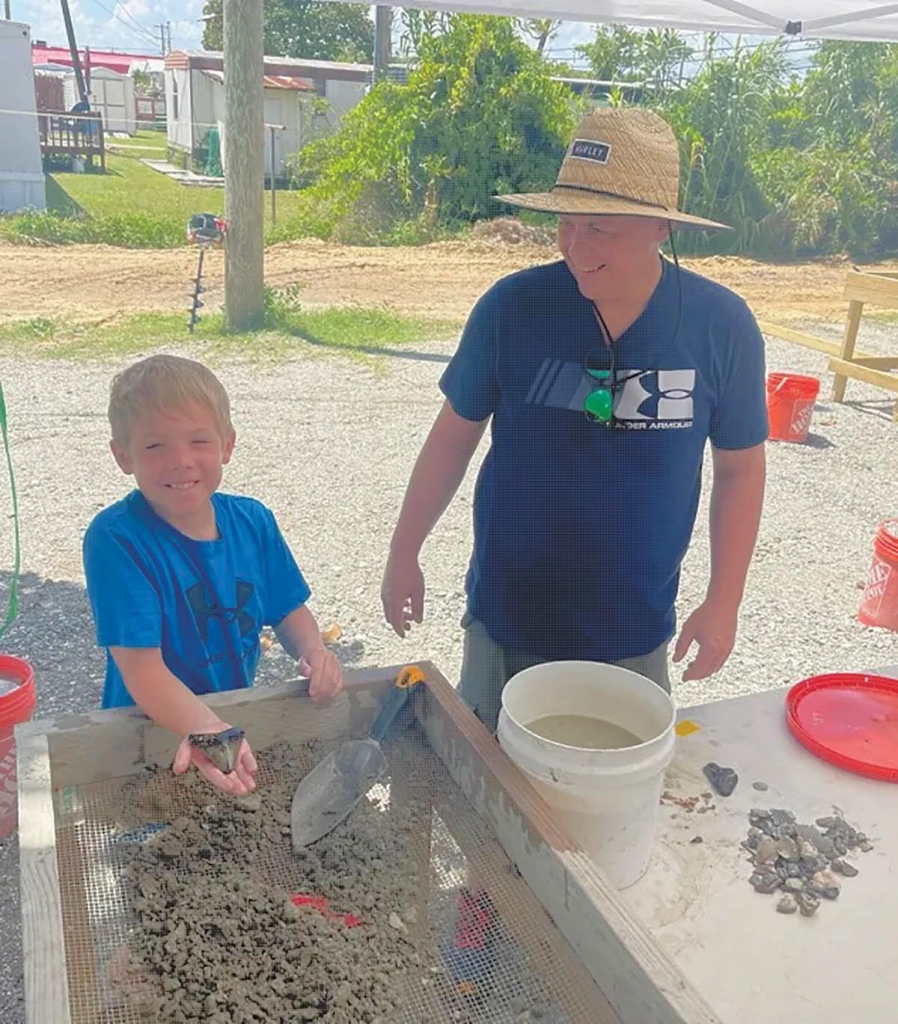
“He told me about this harebrained idea that he had – to put megalodon teeth in buckets of dirt so that people could find their own meg teeth,” Booth said. “I thought it was a wonderful idea because I was on the hunt for my own megalodon at the time.”
This idea became Myrtle Beach Shark Tooth Adventures, and Booth went to work for Sebastian.
“We get the processed coquina from a local mine, and we contract with divers from Wilmington (N.C.) down into Florida to sell us what they find,” she says.
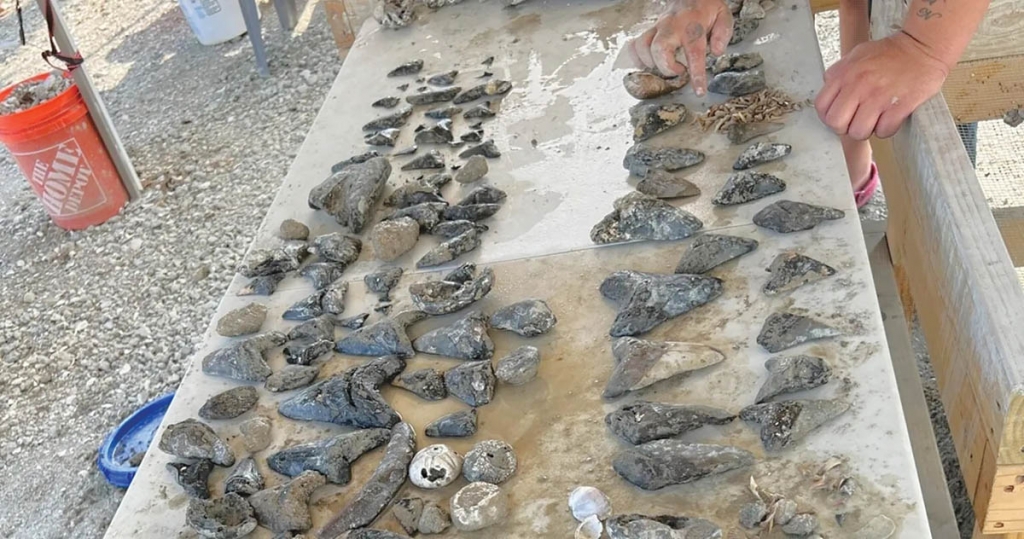
Booth says the business has formulas for seven tiers of buckets – or digs - to sift through – allowing their customers to find a variety of items including megalodon teeth, fossil bones, small beach teeth, fossilized sea sponges, sea urchin spines and more – including fossilized teeth from ancient horses.
“Each of our tiers has megalodon teeth in it – but it’s a mix of fragments, halves and three-quarters – and those are in every bucket by weight. We have several tiers that have whole megalodon teeth as well,” Booth says.
The question arises as to why folks wouldn’t just try to hunt on their own.
“We get a lot of people that have been on the beach while they are here – and they’re looking for shark teeth and can’t find any,” she says. “I think a lot of them have the meg on their mind. Those don’t usually wash up on the beach. It’s usually just tiny ones – and they don’t know what they are looking for.”
Booth says that once they participate in a dig package, participants realize they have been walking past fossils that they simply mistook as pebbles.
“Everybody leaves with some really cool fossils to take home,” Booth says. “We get a lot of kids that are fascinated with sharks – future paleontologists and marine biologists. We try to teach them as much as possible about what they have, so that when they leave they have learned a little something too.”
For more information, visit www.myrtlebeachsharktoothadventures.com
ASHLEY OLIPHANT
CHARLES SHELTON, JR.
TOM PIERCE
LAUREN BOOTH