
Fall is the peak time to see these beauties
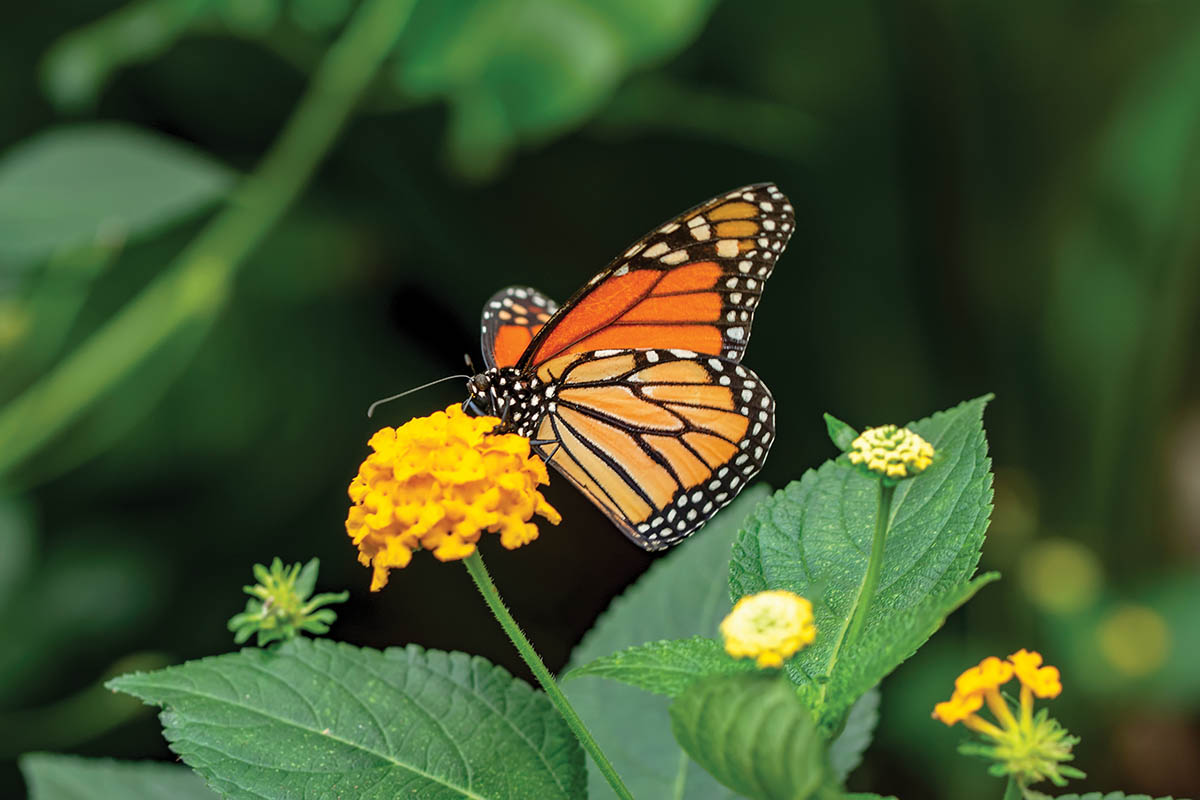
(Danaus plexippus)
Known for their remarkable long-distance migration in fall from Canada to Mexico, these fluttering beauties are also one of the most recognizable of all the butterfly species, sporting bright black and orange markings. They are aided in their fanciful flight by a wing span of nearly four inches.
Along the South Carolina coast, the monarchs can be seen primarily from mid-September through November, with late October being the peak of their migration. Classified as an endangered species due to severe habitat loss caused primarily by wide-ranging and devastating development, these butterflies rely solely on the milkweed plant to lay their eggs. The use of pesticides has decimated that and other flowering plants they rely on for nectar.
Their vibrant, aposematic coloring serves as a warning to predators, because the monarch caterpillar’s only source of food is milkweed, a toxin. To eat the butterfly can be fatal. The butterfly relies on the milkweed plant to lay their eggs.
Weighing less than a paper clip, monarchs can fly upwards of 1,200 feet in warm updrafts, and can cover up to 100 miles in a single day. These butterflies can flap their wings at an amazing 5-12 times/second. To help sustain these interesting insects, conservation biologists suggest planting milkweed, coneflower (echinacea), goldenrod, butterfly weed, black-eyed Susans, and other nectar-rich plants.