
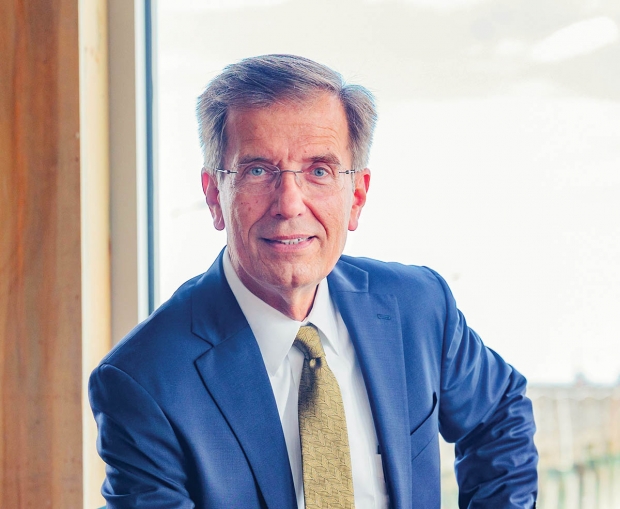


The position of mayor in Myrtle Beach, and in many other small to medium-sized cities around the nation, is supposed to be a part-time job.
Myrtle Beach is ruled by a council/manager form of government. The city manager is the CEO of the corporation and the mayor is like the chairman of the board. While it’s supposed to be a part-time job, and pay is commensurate with part-time work, anyone elected to the position knows what they’re getting into. This is especially true of Mark Kruea, the newest mayor of Myrtle Beach and the city’s 15th since its incorporation in 1938. Before his swearing in on January 13, Kruea served as public information director for the city from August 1998 to April 2024. His retirement was short-lived.
“My son reminded me that I was retired for 20 months,” said Kruea recently from his city hall office, a wood-paneled, modest space in a purpose-built red brick building that has served as city hall since its opening in 1949. His 26-year run as PID, serving with three mayors, including his predecessor Mayor Brenda Bethune, gave Kruea a unique insight into how the city was run, what might be expected of him as mayor, should he win, and how might he influence the change he and others thought the city needed.
A part-time job? Hardly.
“There have been some 12-hour days,” he remarks, “and usually a couple of those per week, but then there are the occasional four and five-hour days, too. Regardless, you’re always attached to the cell phone, or e-mail and the text messages are constant, some more urgent than others.”
As we spoke, a text message came in from a local television reporter asking about tax rates for a story that was to air that night. Kruea, a stickler for details, knew the answer but quickly searched files, sent a few text messages of his own, and verified the information before answering.
In our Day in the Life series we shadow Grand Strand residents with particularly interesting jobs, to get a sense of what their days are like. We were eager to check in with the new mayor to find out really just what goes on in City Hall and how the city manager, the city council, and the mayor manage these 24-square miles called Myrtle Beach.
Back from the beach after a short early morning promotional video shoot with the state-owned Santee Cooper power and water utility, Kruea took time to meet, catch up, and share his vision for the future, and how he’s going about being mayor.
Originally from Salisbury, N.C., Kruea, 68, attended Wake Forest University and eventually moved to Myrtle Beach in 1998. He is widely known and recognized as the face and voice of the city through hard times, good times, tough questions and a city known internationally. We asked Kruea how and why he decided to run for mayor, a tough and demanding job. A job that answers to city residents, the business community and social media warriors tapping hard at their keyboards. A job that requires particularly thick skin.
“We welcome the criticism,” says Kruea, who was a calm and reassuring voice throughout his run as public information director, but was critical of some city spending during his campaign.
Even with his new focus at city hall we asked him about his 26 years as the longtime face and voice of Myrtle Beach.
“I eventually became comfortable in front of the video cameras, and I liked the creativity that came with my former position,” he says. “We got to design billboards and posters, did a lot of photography, created flyers, a little bit of everything. I liked the writing part of it, too. We’re proud of The Friday Fax, which is still going out weekly to around 3,500 people, and engaging with the media and public. When I started in my former role Facebook didn’t exist, no Instagram, newspapers were more relevant…the world has changed a lot in the past 28 years.”
With the sunny skies and good vibes of retirement in his future, how did he make the call to head back to city hall, this time as mayor?
“I did not go looking for it,” he laughs. “Shortly after my retirement I was approached about running for mayor by current and former council people, and others in the business community and even my neighbors. They thought I had a good chance of winning and felt I was qualified and shared a vision for the next, new generations of Myrtle Beach’s residents and businesspeople.”
“The world has changed,” Kruea continues, and this ‘change’ seems to be a recurring theme for him. “Myrtle Beach has changed, and while I’m a history buff, and love the old Jack Thompson photos and nostalgia of the old version of Myrtle Beach, things are now very different. We have changed and grown exponentially. Managed growth and smart spending are vital to the prosperity and well-being of residents, visitors and the business community.”
Kruea regularly meets with city council, senior management at the Myrtle Beach Area Chamber of Commerce, the Myrtle Beach Downtown Alliance and other civic groups to discuss this new vision for a small city with a big economic impact to the entire Grand Strand and the state of South Carolina.
“We need to make a Myrtle Beach for the next generation and the generations to come,” he says. “How do we do that? We need to address the way vacationing has changed, provide fun and engaging experiences, to make sure the city is attractive, safe, welcoming. The Market Common, for example, is beautiful and so is the Grande Dunes. We need to make that attention to aesthetics the standard around the city. We think of ourselves as a world-class resort, yet there are parts of the city that could definitely use some attention. The visitor experience east of Kings Highway in particular. We love the old, original parts of Myrtle Beach, too, but things like landscaping and lighting need attention. We’d like the whole city to look as bright and beautiful as the nicest areas.”
The occasional bad press and sporadic crime, whether within the city limits or not, has given Myrtle Beach a black eye, some say unfairly.
“We need to change that reputational perception,” he continues. “We have a limited window to make a course correction, a culture change. We want to make sure that the city is as inviting, safe and welcoming as we think we are.”
“We have an opportunity to take Myrtle Beach to the next level, that’s really my focus. Post Covid has been a struggle, but we need to look at the whole city, not just these few blocks of the downtown and A&I [Arts & Innovation] district.”
“We’ve spent a lot of money there, and Myrtle Beach is more than just those 10 blocks. In talking with residents and businesspeople from the north end to the south end, we know there are issues that need to be tackled. We need to look at the entire city. Tourism numbers were down about three percent last year Grand Strand-wide and projections are about the same for another three percent drop in 2026. We’ve lost a big chunk of the fun, the reputation upon which Myrtle Beach was built. We need to bring the fun back.”
Mayor Kruea, behind the wheel of his car, pilots us on a short road trip toward The Market Common where an appointment for a haircut awaits. He knows the short-cuts from City Hall down Broadway St., to 3rd. Ave. North, to Withers Swash Drive and out onto U.S. 17 Business. As a Market Common resident since 2012, this path is a familiar one for Kruea, and while he says he appreciates the long-term vision for greenways and other downtown initiatives, he worries that so much money has been earmarked for projects that may benefit just a few.
“We meet generally with Jason Greene of the Myrtle Beach Downtown Alliance every two weeks.” The MBDA mission statement describes its goals and focus as such: The MBDA is a 501(c)3 place management organization dedicated to the revitalization of Downtown Myrtle Beach. MBDA is committed to strengthening both the public and private sector's commitment to, and collaboration around, revitalizing downtown and diversifying the Myrtle Beach economy.
Many of the MBDA goals generally align with Kruea’s, but he wants to see a much broader scope and vision for Myrtle Beach as a whole, and worries about expenditures that, to him, seem excessive, considering the needs of the rest of the city.
Kruea is aware that Myrtle Beach is the Grand Strand’s epicenter and what happens in Myrtle Beach affects the entire Grand Strand.
“Myrtle Beach is only about two percent of the Grand Strand, land-wise,” he says, “but about forty percent of its economy.”
On Kings Highway just north of the airport, between 3rd Ave. N. and Harrelson Blvd., Kruea sighs as he looks left and right.
“This could look so much better,” he says wistfully. “This is one of our main thoroughfares through the City, and if you compare it to The Market Common, it falls short. We’ve put utility poles underground in places, and this part of Kings Highway was once on the list, but it got changed. Around 1999 the city required all new construction to have the utilities, apart from major transmission lines, all to be buried underground.” This is part of the reason why The Market Common, Grande Dunes and Del Webb all have the sleek, well-groomed modern look the Mayor would like to see everywhere, but there are challenges.
“Burying the utilities that are already in place is very expensive,” he adds.
As a new mayor, Kruea enjoys the luxury of agreeing with some of the critics of particular city expenditures, while being blameless for those decisions that were made before he took office. It allows him the opportunity to ask tough questions of the Council and City Manager and to revisit these plans and project a new perspective on future projects.
Kruea says he’d like to see a shift from an exclusive downtown focus to include neighborhood and city-wide needs.
“We need to make sure we’re moving the needle and not just spending money.”
9:57 a.m.
Even mayors require haircuts on occasion, and Kruea is no exception. He’s had the same stylist for some 17 years, Katy Kaplan, whose salon is in The Market Common. The mayor, wrapped in a barber cape and sitting in the chair, continues:
“I want to see Myrtle Beach move to a new place. We have already started to have important discussions along those lines. Among other things we need to be more business friendly, see a complete culture change there. We’re in the middle of a zoning rewrite, which will hopefully streamline the approval process on everything from signs to building permits.”
“We are a very young town, and we’ve enjoyed tremendous growth, but we need to reverse the trend and the dip in tourism numbers. Post Covid has created all kinds of challenges, so there are some economic factors, but our reputation has suffered, and we’re not as shiny as we think we are and need to be. The perception of crime is greater than the reality, but when People magazine [and other national media] regularly cover crime in Myrtle Beach, that’s a problem.”
The former City of Myrtle Beach Police Chief Amy Prock served under the management of the city manager and retired on April 2. The first woman in Myrtle Beach to hold the position, she served nine years as chief and was with the PD for nearly thirty years. Assistant Chief Chris Smith will serve as the interim chief until a permanent replacement is announced.
“I’ve known Amy my entire career,” says Kruea, “watched her come up through the ranks, and really enjoyed working with her. We’re doing a nationwide search to find her replacement, and we may find a rock star within the current department, but we will be looking broadly.”
“I’ve never given an interview while getting a haircut,” he remarks, “though I got a tetanus shot on live TV once.”
Haircut complete, the newly coiffed mayor will head over to RIOZ Brazilian Steakhouse on 29th Ave N. for a luncheon sponsored by the Horry Georgetown Home Builders Association.
With a little time to spare, we take the long way and drive down Ocean Blvd, passing Peaches Corner at 9th Ave N. and he eyeballs three or four trash receptacles as we head toward the SkyWheel.
“Good, the trash has been picked up,” he comments. “They were full and overflowing last week. The perceptions from visitors about the city revolve around these kinds of details. Are the streets clean? Have the traffic lines on the roads been repainted? That kind of thing makes a big difference. Some businesses down here have left because of what they perceived as a decline in the neighborhood. That’s something we need to change.”
Driving up 9th Ave. N past Nance Plaza at Main Street, Kruea points out the successful new and new-ish businesses and restaurants that have opened. He points out Grand Strand Brewing, Boteco Brazilian, The Tasting Room, The Dolly Llama, and is happy to see the block doing well but wonders if the city can justify the considerable investment, with millions more planned for the area.
“At the end of the day we spent $80 mil and have 5 new restaurants to show for it.”
Mic drop. An upcoming budget retreat will address this and other city spending issues.
“We need to find a way to better promote our fantastic food scene here,” he says. Divorced and currently single, Kruea is a big fan of eating out and says he has some 25 restaurants he regularly patronizes. He’s especially fond of the home cooking at Big Mike’s Soulfood on 16th Ave N., owned by longtime councilman Mike Chestnutt. He also likes pizza, burgers and the international cuisine Myrtle Beach is getting better known for as well.
At RIOZ he will have the opportunity to press the flesh and sit with many of the same leaders he meets with regularly and meet dozens of businesspeople he wouldn’t otherwise see. The luncheon and presentations will last through the early afternoon.
Before we part company, I have one more opportunity to ask the mayor about his style of leadership and the vision he sees for the city.
As the new mayor, what is your mandate and what is your vision for Myrtle Beach?
“Firstly, we should never be afraid to be criticized. Heavens, we may not always get it right and we’re looking for input and suggestions. Those conversations need to occur.”
“I’d like to see the site of the old Pavilion redeveloped. That will spur redevelopment of the older part of town—something we’ve been trying to do for 30 years. That will provide a new core experience for Myrtle Beach in the same way The Market Common and Broadway at the Beach did. It could help create the Myrtle Beach of tomorrow.”
Kruea’s future as Myrtle Beach’s Mayor?
“I’m taking this one four-year term at a time. Let’s see how far we can get.”
Starry-eyed, hopeful, and forward-looking, Kruea is also not afraid to recognize and address the challenges the city faces.
“We need to seize the opportunity to build the next Myrtle Beach. We need to play to our strengths but also recognize that people’s expectations have changed. The opportunity and potential are there, it’s golden. We need to celebrate the old and welcome the new. As long as we don’t stub our toes, we can make it happen.”